On this page
Melbourne summers are unpredictable. One day the heat is dry and harsh, and the next it is sticky and humid. That mix of conditions makes choosing the right cooling system critical. Most homeowners ask the same question: should I install evaporative cooling or refrigerated air conditioning?
Both systems can keep your home comfortable. Both have advantages. The real difference comes down to performance in Melbourne’s climate, cost to install and run, and the type of comfort you want.
At Powerband Electrical, we work with both evaporative cooling and air conditioning systems. We install, repair and maintain them every day across Melbourne. This means we know exactly where each system works best and where it does not.
This guide compares evaporative cooling and air conditioning in detail so you can make the most informed choice for your home.
What Is Evaporative Cooling?
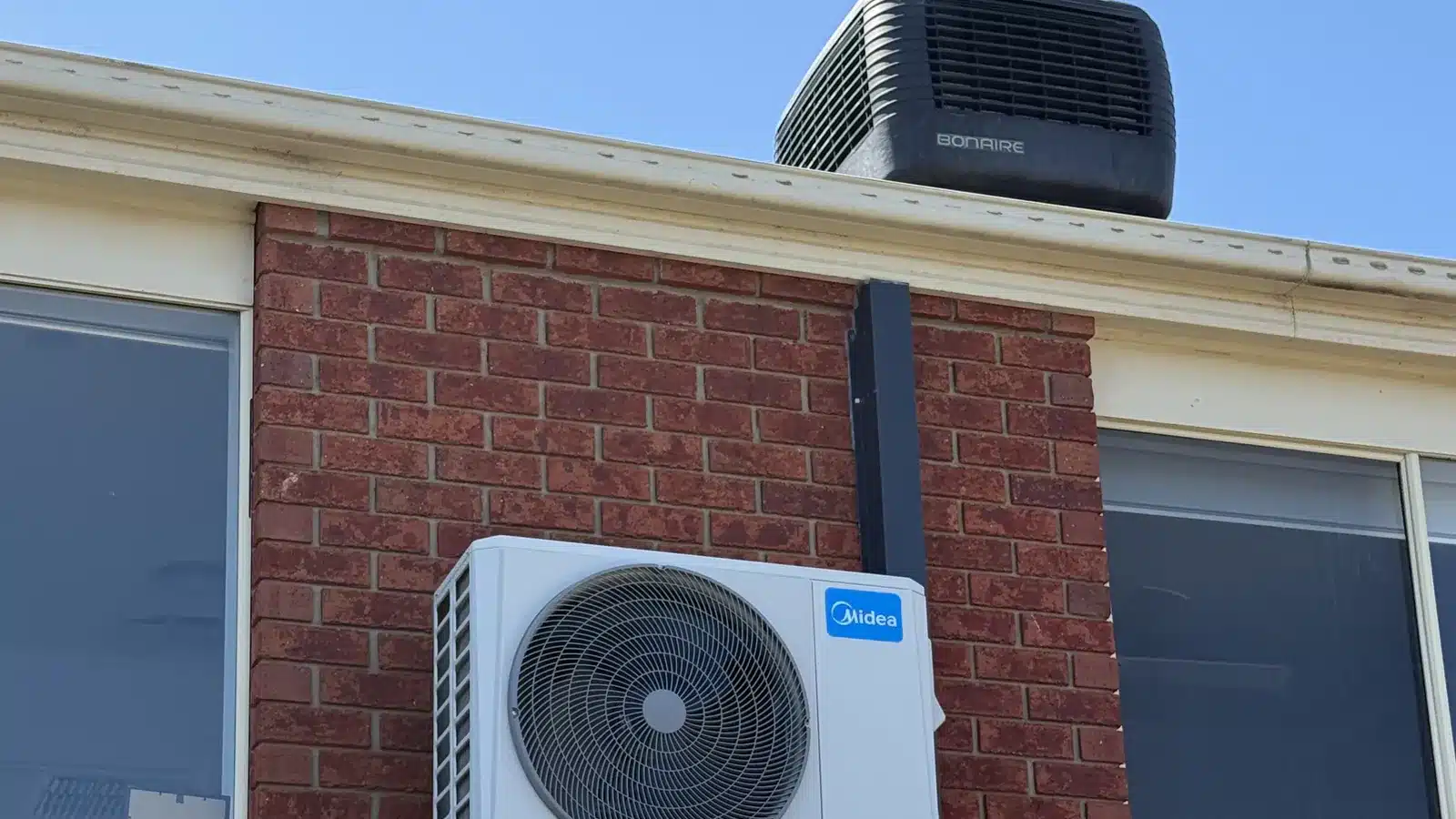
Evaporative cooling uses a natural process. A fan draws hot outside air through pads soaked in water. As the air passes through, it cools and is then pushed into your home through ducts.
Unlike refrigerated air conditioning, evaporative systems bring in a constant supply of fresh air. The air inside your home is replaced several times an hour, which avoids the stale or dry feeling that some people dislike about refrigerated systems.
Benefits of evaporative cooling:
Uses less energy than reverse cycle systems
Lower annual running costs
Provides continuous fresh airflow
Environmentally friendly, since it uses water and no refrigerant gases
Limitations of evaporative cooling:
Cooling power drops during humid weather
Requires a steady supply of water
Windows or doors need to be partially open to allow airflow
What Is Refrigerated Air Conditioning?
Refrigerated air conditioning, often called reverse cycle when it can also heat, is more advanced. The system pulls warm air from inside, passes it across coils filled with refrigerant, and expels the heat outside. The cooled, dry air is then circulated back into your home.
This system is not affected by humidity, so it works just as well on sticky Melbourne days as it does on hot, dry ones.
Benefits of refrigerated air conditioning:
Powerful cooling regardless of humidity
Can provide heating as well as cooling
Precise temperature control with thermostats
Effective in every Australian climate
Limitations of refrigerated air conditioning:
Higher upfront installation costs
Running costs are significantly higher
Air can feel dry after long use
Cost Comparison
| Factor | Evaporative Cooling | Refrigerated Air Conditioning |
|---|---|---|
| Upfront installation | $2,000 – $5,000 | $3,500 – $10,000+ |
| Running costs (annual) | $100 – $200 | $400 – $800+ |
| Maintenance | Pad replacement, water use | Filter changes, refrigerant checks |
| Lifespan | 10 – 15 years | 12 – 18 years |
Evaporative cooling is cheaper to run, but the performance gap in humid weather makes air conditioning more consistent.
Performance in Melbourne’s Climate
Melbourne’s weather is famously unpredictable. Evaporative cooling is excellent during long stretches of dry summer heat, but its performance drops when humidity rises. On humid days, the air cannot absorb as much moisture, which means the cooling process is less effective.
Refrigerated air conditioning is unaffected by humidity. It delivers steady cooling all year, even during sticky weather. For homes where comfort in every condition is the priority, refrigerated systems are the more reliable option.
Energy Efficiency
Energy efficiency is where evaporative cooling shines. It uses up to 80 percent less electricity compared to reverse cycle systems. If you are looking to keep bills down and your environmental footprint smaller, evaporative is hard to beat.
Refrigerated systems, however, are still efficient in their own right, especially when using modern inverter technology. They do use more power, but they also deliver stronger, more reliable cooling.
Maintenance and Servicing
Evaporative cooling requires seasonal maintenance. Pads need to be cleaned or replaced, water lines flushed, and the system checked before summer starts. If you skip maintenance, efficiency and cooling quality drop quickly.
Air conditioning systems require filter cleaning, refrigerant checks, and occasional servicing of the compressor unit. While the maintenance is different, it is also essential. A neglected refrigerated system becomes less efficient and costs more to run.
Which One Should You Choose?
Choose evaporative cooling if:
You want the lowest running costs
You prefer natural, fresh airflow
You live in a drier part of Melbourne
You are environmentally conscious
Choose refrigerated air conditioning if:
You want reliable cooling in every condition
You want both heating and cooling in one system
You need precise temperature control
You are comfortable with higher running costs
Final Thoughts
Both evaporative cooling and air conditioning have their place in Melbourne homes. If you want to keep costs low and enjoy fresh air flow, evaporative cooling is an excellent choice. If you want guaranteed comfort regardless of weather and the ability to heat in winter, refrigerated air conditioning is the stronger option.
At Powerband Electrical, we install, repair, and maintain both systems. Our licensed team can assess your home and recommend the best solution based on your budget and lifestyle.
Call us today on 0466 355 441 or request a free quote online.
Which is cheaper to run, evaporative cooling or air conditioning?
Evaporative cooling is far cheaper to run. Annual running costs are typically between $100 and $200, compared to $400 to $800 for refrigerated systems. The trade-off is that performance drops during humid weather.
Is evaporative cooling effective in Melbourne’s climate?
Yes, but only during dry heat. Melbourne’s humidity can reduce the effectiveness of evaporative systems, which is why many homeowners still choose refrigerated air conditioning for year-round comfort.
Can evaporative cooling cool as well as air conditioning?
Evaporative cooling can make a big difference on hot, dry days, but it will never match the precise, consistent cooling of refrigerated air conditioning. Refrigerated systems maintain exact temperatures in all weather conditions.
Which system lasts longer, evaporative cooling or air conditioning?
Both systems can last over 10 years with proper maintenance. Refrigerated air conditioning often lasts longer, with a typical lifespan of 12 to 18 years compared to 10 to 15 years for evaporative systems.
Does evaporative cooling use a lot of water?
Evaporative systems do use water, but not excessively. A typical unit might use 15 to 25 litres per hour. For most households, the water use is balanced by the lower electricity costs.
Can refrigerated air conditioning also heat my home?
Yes, if you install a reverse cycle system. Reverse cycle air conditioners can provide both cooling in summer and heating in winter, making them a versatile all-in-one option for Melbourne homes.
Which option is better for large homes?
Large homes often benefit from refrigerated air conditioning, especially ducted reverse cycle, because it provides stronger, more consistent cooling across multiple rooms. Evaporative can work well in open-plan designs, but performance depends heavily on weather conditions.