
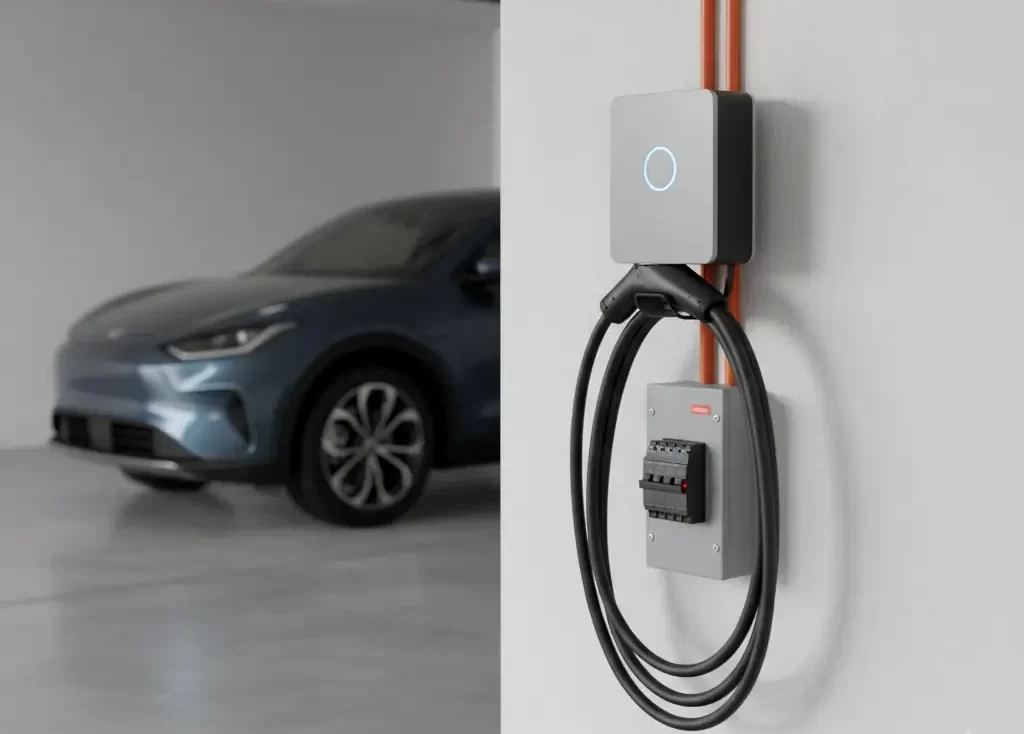
The Essential Guide to Installing an EV Charger at Home
1. Introduction: Fueling the Future, Powering Your Home ⚡
- Hook the reader: The convenience of ‘fuelling’ your car overnight at the cheapest rates.
- The Melbourne Context: Emphasize the rising popularity of EVs in Victoria and the need for a reliable home charging setup.
- Safety First: Stress that this is not a DIY job—it requires a licensed electrician who understands Australian wiring standards (AS/NZS 3000).
2. Before You Buy: Choosing the Right Charger for Your Needs
- Level 1 (The Power Point): Briefly dismiss this as a slow, inefficient option for daily use, only suitable for emergencies.
- Level 2 (The Dedicated Wallbox – The Standard):
- Focus on the two main types: Single-phase (7kW) and Three-phase (22kW).
- Single-phase: Perfect for most homes and overnight charging.
- Three-phase: Only required if your home already has three-phase power and you need faster charging, which is less common in typical Melbourne residential setups.
- Smart Chargers: Discuss the benefits of Wi-Fi-enabled chargers for scheduling (to take advantage of off-peak electricity tariffs) and energy management.
3. The Electrical Reality Check: Your Switchboard and Supply 💡
- This is the most critical and unique section for an electrician’s blog.
- The Load Problem: Explain that an EV charger is essentially another oven or air conditioner running simultaneously. Older Melbourne homes, especially those with original fuse boxes or limited capacity, may not handle the extra load.
- The Non-Negotiable Upgrade: Detail the need for a switchboard upgrade (to modern circuit breakers and safety switches/RCDs) to safely support the charger and prevent outages or, worse, electrical fires.
- Dedicated Circuit: Explain that the charger must be wired to its own dedicated circuit, never sharing power with other appliances.
4. The Installation Process: What to Expect from Powerband Electrical
- Initial Site Visit/Assessment: The electrician inspects the location (garage, carport, driveway), assesses the distance to the main switchboard, and determines the capacity needs.
- Quote and Approval: Provide a transparent, fixed-price quote covering all electrical work and the necessary compliance.
- Installation Day: The process of running the new cable, mounting the wallbox, installing the necessary circuit protection in the switchboard, and testing the system.
- Energy Provider Notification: Mention that the electrician will need to notify the electricity network distributor (e.g., AusNet Services, Powercor) about the significant new load.
5. Permits and Compliance in Victoria 📜
- Victorian Regulations: Briefly explain that all work must comply with EnergySafe Victoria (ESV) requirements.
- Certificate of Electrical Safety (CES): Emphasize that a CES must be issued by the licensed electrician upon completion. This is your guarantee of safe, compliant work and is often required for insurance purposes.
6. Cost Factors: Why the Price Varies
- The “Standard” vs. “Complex” Install:
- Standard: Charger mounted on a garage wall close to a modern switchboard.
- Complex: Long cable runs, drilling through masonry, trenching, or, most commonly, a full switchboard replacement.
- Government Incentives: While federal rebates are limited, mention local or manufacturer incentives that may offset the upfront cost.
Save Big on Installation
Considering a home EV charger in Melbourne? Learn about installation costs, necessary electrical switchboard upgrades, local permits, and why you need a certified electrician.
Get a Free Quote
How long does the installation take?
A standard installation usually takes 4–8 hours. If a switchboard upgrade is necessary, it may take a full day or require a separate booking.
Can I just plug my EV into a normal power point?
You can, but it’s extremely slow (Level 1 charging) and is not recommended for daily use. It puts prolonged stress on the circuit and is less safe than a dedicated Level 2 wallbox.
Do I need a new electricity meter?
Not necessarily. Most homes will use their existing smart meter. However, some installations may benefit from a separate circuit that is specifically tariffed for EV charging.
What is a “safety switch” and why do I need one?
A safety switch (RCD/RCBO) is a life-saving device that instantly cuts power if it detects a fault. Your EV charger circuit must be protected by a modern, dedicated safety switch as per Australian standards.
Do I need permission from my body corporate (for apartments)?
Yes. For apartment buildings or units, you will absolutely need permission from the body corporate and may need a bespoke solution designed for communal power supply.